Articles · Techniques
How to make pasta dough by hand
Two ingredients, twelve minutes, and one argument that does not matter. What 00 flour really means, egg versus water, and why the rest is not optional.
Pasta dough is two ingredients and about twelve minutes of work, and almost everything written about it is an argument over the first ingredient. Most of that argument does not matter. What matters is how much liquid goes in, and whether you leave it alone afterwards.
Flour: the part everyone overthinks
"00" describes how finely the grain was milled, not how strong it is. It is not a quality grade and it is not a promise of protein. It makes a smooth, extensible dough that rolls easily, which is why northern egg pastas use it — but a decent plain flour makes genuinely good pasta, and some 00 flours are too weak for wetter doughs.
The flour that actually behaves differently is semola rimacinata, finely re-milled durum. It is yellower, firmer, chewier, and it takes up water differently. That is the flour behind the southern shapes you make with your hands rather than a pin.
Egg or water is a regional question, not a quality one
Egg pasta is northern and central: roughly 100g of flour to one large egg, which is about 50g out of the shell. Swap some white for an extra yolk and you get more fat and a softer, richer, yellower dough; keep the whites and it stays firmer and more elastic. That is the whole dial.
Water pasta is southern: 100g semola to 45–55g water, no egg at all. It is not the poor relation. It is a different pasta, made for different shapes, with a firmer bite.
Knead, then leave it alone
Eight to twelve minutes by hand, but stop on the dough rather than the clock: smooth instead of shaggy, firm and elastic, springing back slowly, no dry pockets left. Then rest it, covered airtight, for twenty to thirty minutes.
The rest is not idleness. The flour keeps absorbing water, the gluten finishes hydrating and equilibrating, and the network you just stressed relaxes so it will roll instead of fighting you. Skip it and the dough springs back every time you push it out. Leave it uncovered and it forms a skin that never rehydrates.
You will not over-knead this by hand. What actually happens is a dough that gets tight and warm — and a short rest fixes that too.
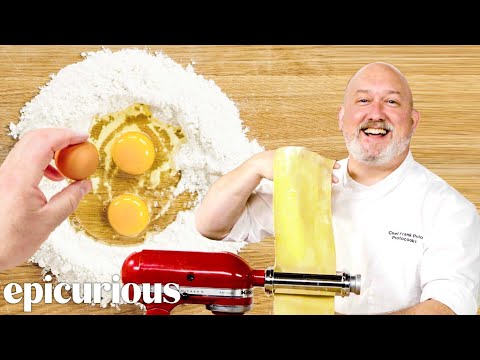

Rested dough still has to become pasta, which is its own set of decisions about thickness and dusting — rolling it out by hand needs no machine either.
What to cook it with tonight
Fresh pasta wants a sauce that is already in the house, not a project. Tell FridgeToForks what is in your fridge and it will tell you what you can cook right now and what you are short of — several of the pasta dishes below need nothing beyond what is already in the cupboard.
When it will not come together
A dough that stays crumbly is usually just dry: wet your hands rather than adding a splash, which is how it goes sticky. A dough that will not roll out is almost always under-rested, so give it another twenty minutes rather than more flour. And if the surface has dried into a skin, that piece is not coming back — cut it off rather than kneading it through the rest.