Articles · Techniques
Pasta shapes you can make with your hands
No machine, no eggs, no rolling pin. Semola and water worked into orecchiette, cavatelli, strozzapreti, pici and trofie, with the technique for each.
The pasta that needs no machine also needs no eggs. Semola and water, worked by hand into shapes designed centuries before anyone owned a roller — this is the southern Italian tradition, and it is the cheapest, most forgiving way into making pasta.
The dough is two things and one number
100g semola rimacinata to 45–55g water. Knead seven or eight minutes until it is firm and smooth — it will feel tighter and less silky than egg dough, which is correct — then rest it covered for about thirty minutes.
That is the whole dough. No eggs, no oil, no salt in the dough itself.
Semola dough feels wrong if you have only made egg pasta. It is stiffer, slightly grainy under the hands, and it never goes silky. That is the flour behaving normally, not a fault, and adding water to chase a softer feel gives you shapes that slump instead of holding their grooves.
Orecchiette and cavatelli
For orecchiette, roll a rope about 1.5cm thick and cut it into pieces roughly 8mm wide. Drag a blunt table knife across each piece towards you so it curls, then turn that curl inside out over your thumb. The knife is what gives the inside its rough surface, and the rough surface is what holds sauce.
Cavatelli are the same family, less fiddly. Roll a thinner rope, about 1cm, cut into pieces of one to two centimetres, and press each with the pads of two or three fingers while dragging it towards you. It rolls into a small hollow shell. No thumb-flip, deeper grooves, better with chunky sauces.
Strozzapreti, pici and trofie
Strozzapreti: roll the dough out, cut strips a centimetre or two wide, tear them into short lengths and roll each between your palms into a loose twist. Leave the ends ragged — sealed tubes are the wrong shape.
Pici are thick hand-rolled strands, usually soft wheat and water: cut narrow strips and roll each under your palms into a long uneven cord. They are meant to be irregular. Trofie want thin ropes cut short, then rolled diagonally under the fingers so each piece twists and tapers. Ligurian, and made for pesto.
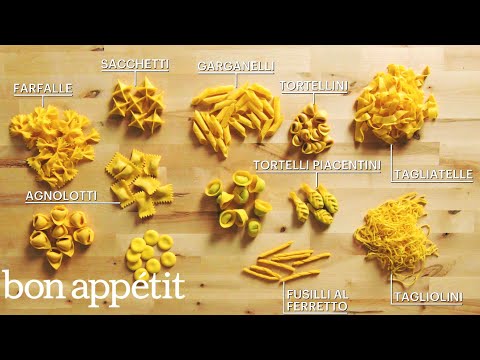

These are thicker than ribbons and behave differently in the pot, which matters more than people expect — cooking and saucing fresh pasta is not the same job as cooking dried.
What to eat them with tonight
These shapes were built for whatever was in the house, which is the same problem you have at six o'clock. Tell FridgeToForks what you actually have and it will tell you what you can cook now and exactly what you are short of.
Cooking them, and drying them
Fresh, these take about four to five minutes — longer than ribbons because they are much thicker. Dried overnight on a tray, the same orecchiette want eight to ten. Start tasting early either way: the centre should be hydrated with no chalky core, and still have real resistance.
If you dry them, dry them properly and completely, in a single layer, and give them a day. Half-dried pasta stored in a tub is how you grow mould on something you made yourself.